Home/Printables Basket/Build It! Brick Cards Basket
Build It! Brick Cards Basket
Printables Basket

Build It! Brick Cards Basket

Printable build cards paired with the bricks you already own. Your child copies the picture with real bricks — a screen-free building challenge that grows with them.

This page may contain affiliate links. I earn a commission from qualifying purchases.

Ages 3-710 min prep

We have a giant tub of bricks that my kids used to tip out, stare at, and abandon. Too many choices, no starting point.

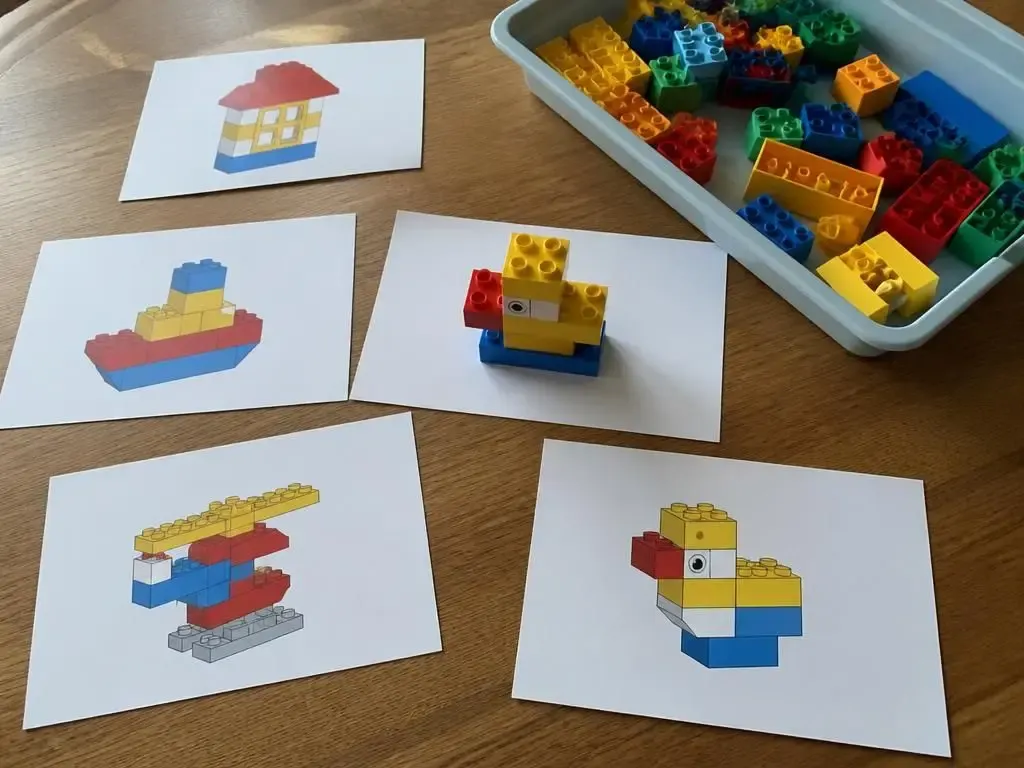
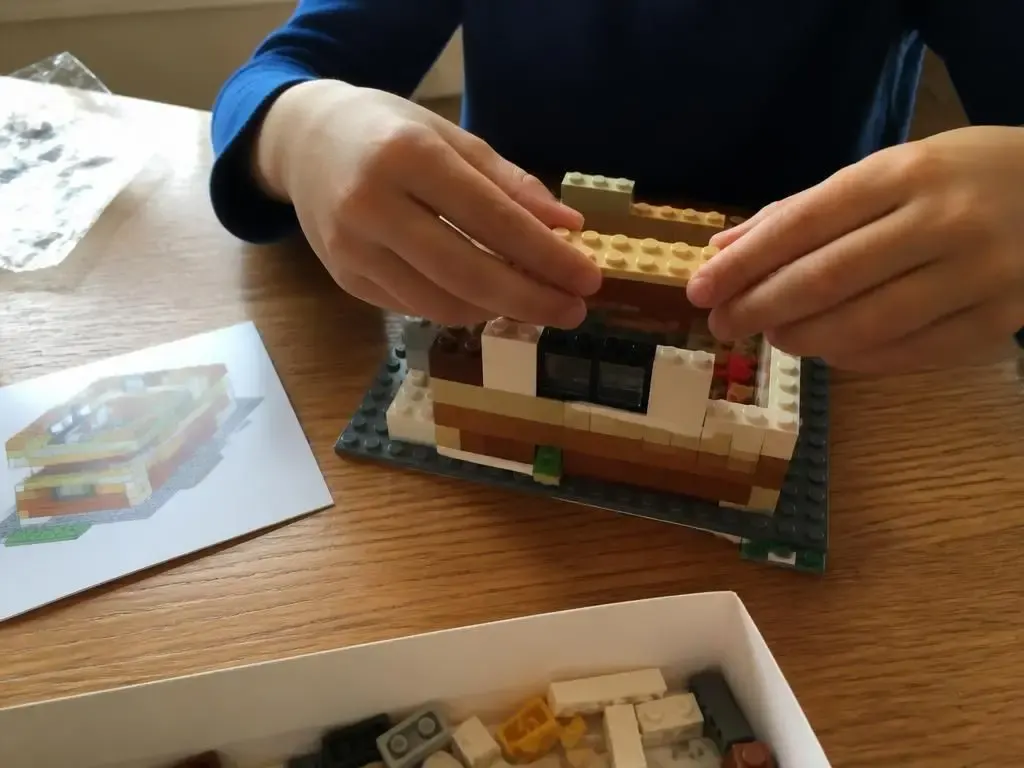
The build cards fixed exactly that. A single picture on a card gives them somewhere to begin, and once they have copied it they almost always keep going on their own.

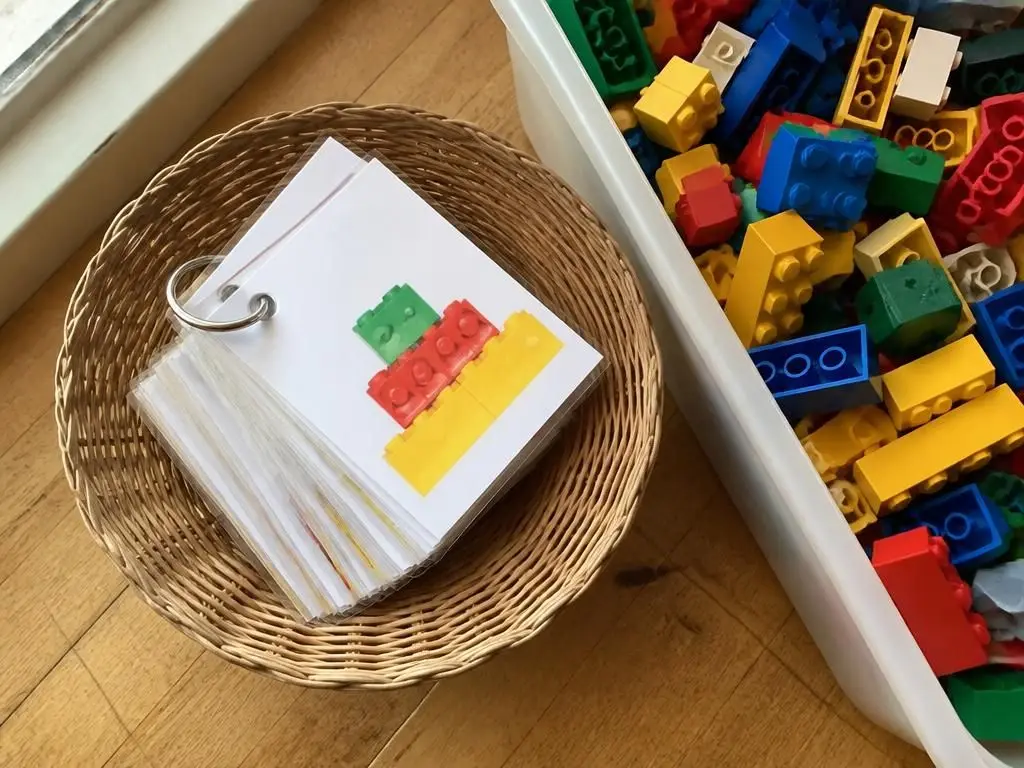
I keep the cards on a metal ring in the brick tub, so the invitation is right there when the lid comes off.

One card, one starting point — and then they keep going alone.
Laminated cards on a ring, living inside the brick tub.

What you'll need

  • The printable Build It! brick cards (download below), printed on plain paper or thin card
  • Scissors to cut the eighteen cards apart
  • A tub of building bricks — Duplo, Lego, or any chunky bricks you already have
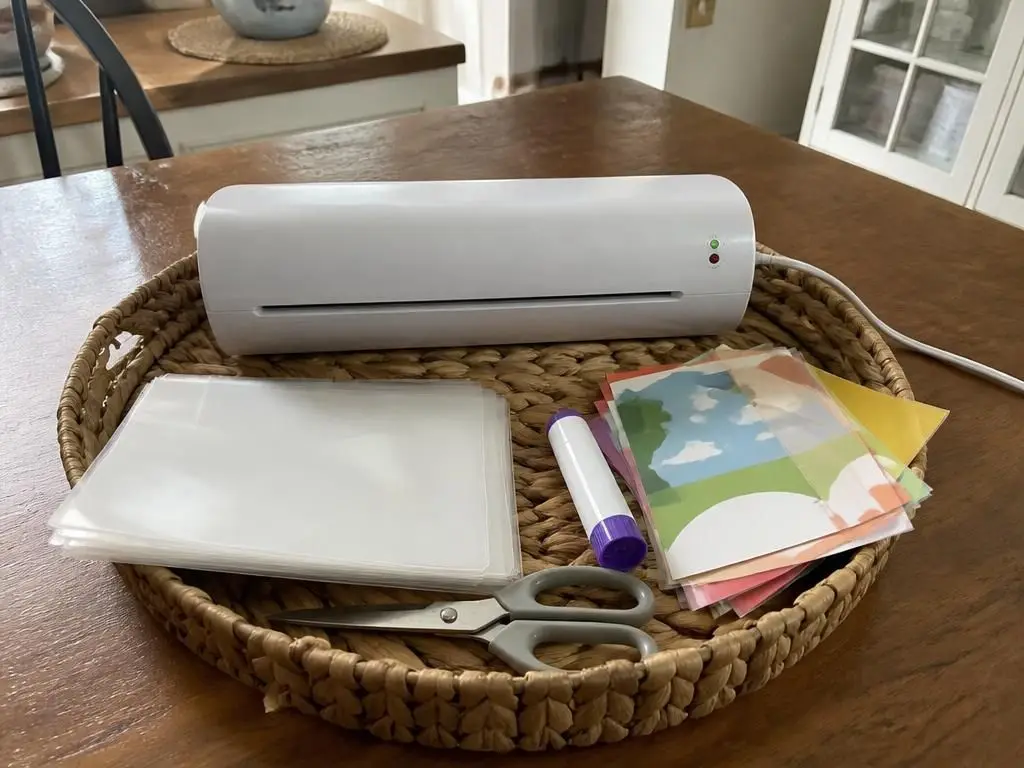
  • Optional: a laminating pouch or clear contact paper so the cards survive the floor
  • Optional: a metal binder ring and a hole punch to keep the cards together
  • A shallow tray or basket for the bricks so pieces stay findable

How to make it

  1. 1

    Print the nine sheets and cut along the dotted lines to make eighteen individual build cards, from a simple four-brick tower up to a giraffe, a hot air balloon and an ice cream cone.

  2. 2

    Laminate them or slide them into clear sleeves if you can — these get handled with sticky hands and stepped on.

  3. 3

    Punch a hole in the corner of each card and thread them onto a binder ring, then clip the ring to the brick tub.

  4. 4

    Set out the bricks in a shallow tray rather than a deep tub — children build far more when they can see the pieces.

  5. 5

    Invite your child to pick one card and find the bricks that match. For younger children, help them find the base piece first and build upwards.

  6. 6

    When they have copied a card, ask what they would change. This is where the real building starts.

  7. 7

    Add your own cards: photograph a build your child invents, print it small, and add it to the ring. Their own creations become the next challenge.

Why DUPLO is the one toy I would keep

The cards are only the beginning. What I love about DUPLO is how versatile it is — the same tub of bricks becomes a bridge, a bowling alley, a raft, a printing stamp, a counting tool. Nothing else in the toy cupboard stretches that far.

It is the kind of toy that hands the imagination back to the child instead of doing the playing for them, and that is exactly the play that builds language, planning and problem solving.

I will exaggerate happily here: with all the noisy plastic gadgets we buy children today, it feels like a small injustice to skip the one box that actually gets played with for years.

Below are the six games we play with the very same bricks, once the build cards have been copied.

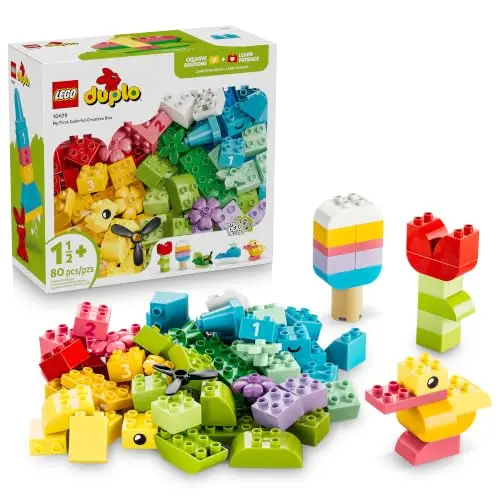
The DUPLO box we use — LEGO DUPLO My First Colorful Creative Box (80 pieces)

This is an affiliate link. If you buy through it I earn a small commission, at no extra cost to you 🙏

1. Build something odd, then draw its silhouette

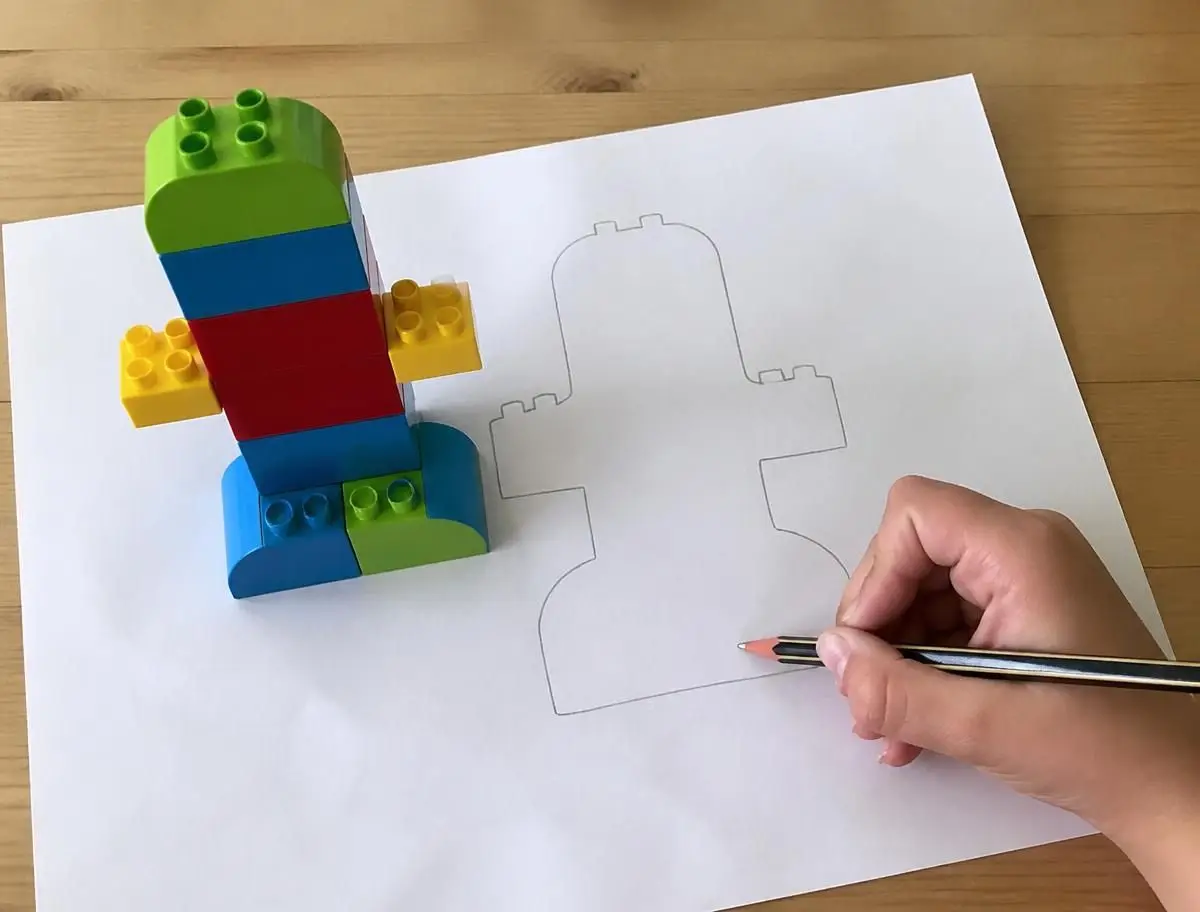
Let your child build a creature or machine that does not exist, stand it on a sheet of paper, and trace around it with a pencil.

Lift the build off and you have an outline puzzle: can they rebuild it from the silhouette alone tomorrow? Can a sibling?

It quietly teaches shape, outline and symmetry, and the drawings pile up into a homemade set of build cards.

Trace around the build, lift it off, and the outline becomes tomorrow's challenge.

2. DUPLO bowling

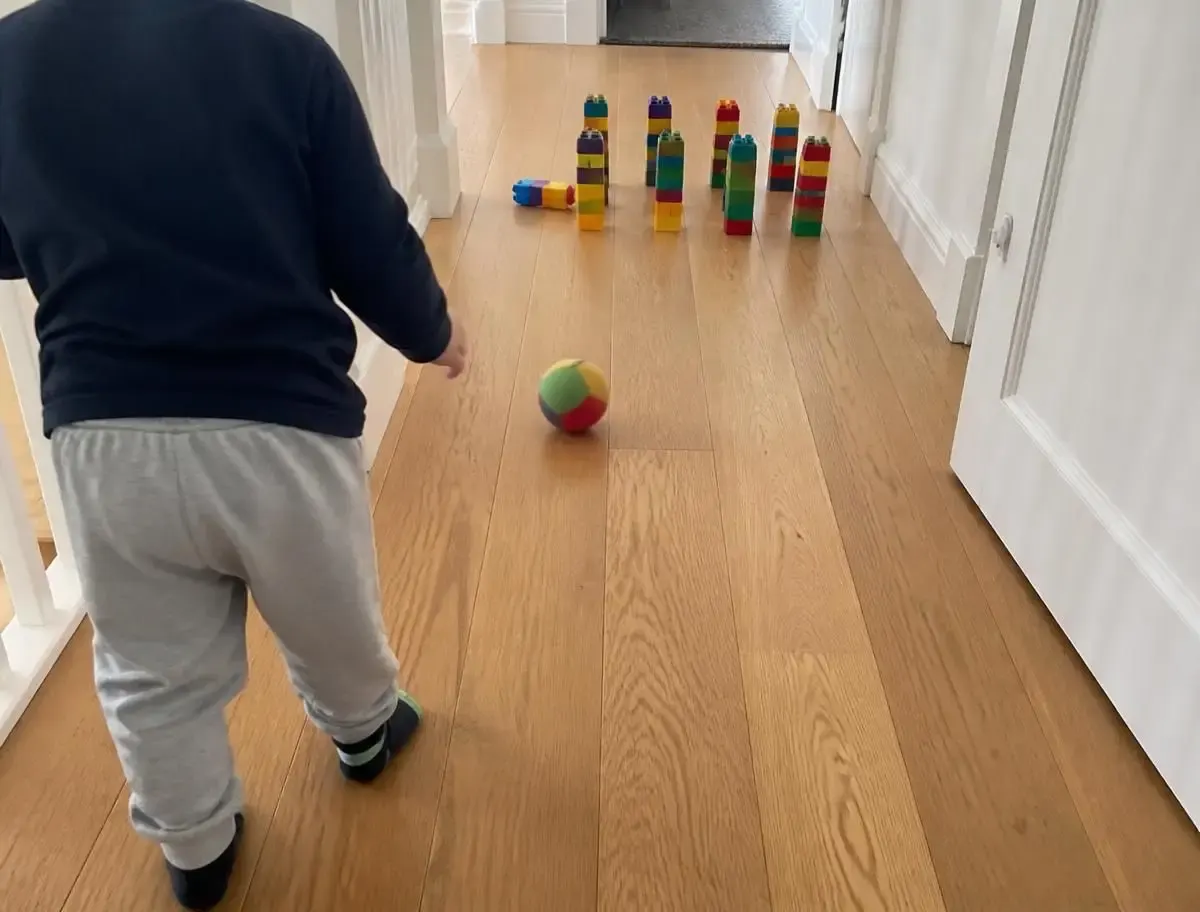
Build ten narrow towers, four bricks tall each, and stand them in a triangle at the end of a hallway.

Roll a soft ball and count what falls. Two rolls each, add the numbers, and you have accidental arithmetic.

Rebuilding the pins is half the game — my kids play the setup as seriously as the throwing.

Ten brick towers in a hallway, one soft ball, endless rounds.

3. Marble-run pieces plus water

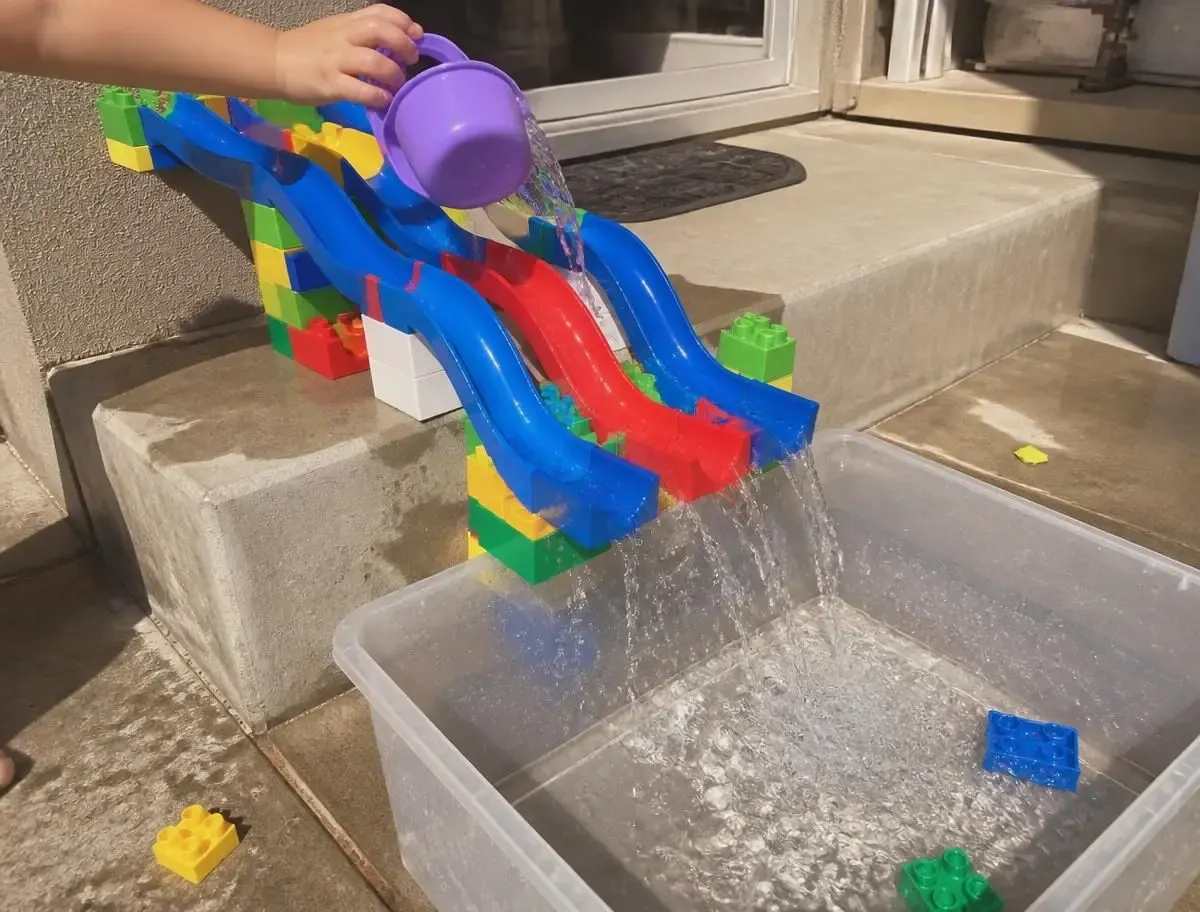
Take the chutes from a marble run, prop them on stacks of DUPLO at different heights, and run real water down them into a tub.

Give your child a small jug and let them work out why water pools where the slope is too flat — then raise the bricks one level and watch it flow.

Do this outside or in the bath. It stays interesting far longer than a paddling pool.

Marble-run chutes propped on brick towers, water pouring into a tub.

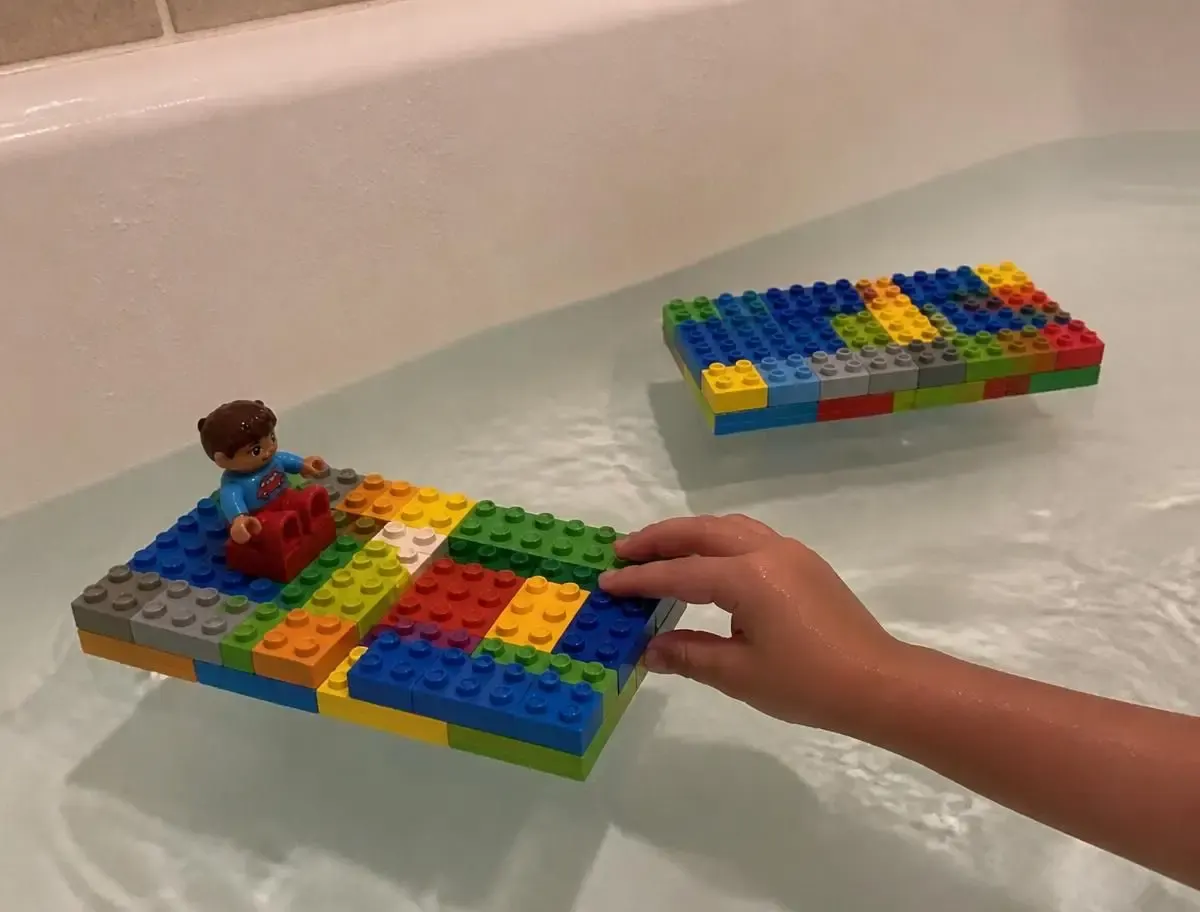
4. Bath rafts

Build a flat platform, two bricks thick, and float it in the bath. Add a small figure as a passenger.

The challenge is how many passengers a raft can carry before it tips — floating, balance and a bit of engineering, all in the tub.

Rinse and dry the bricks afterwards and they go straight back in the tub.

A flat brick raft with one passenger — how many before it tips?

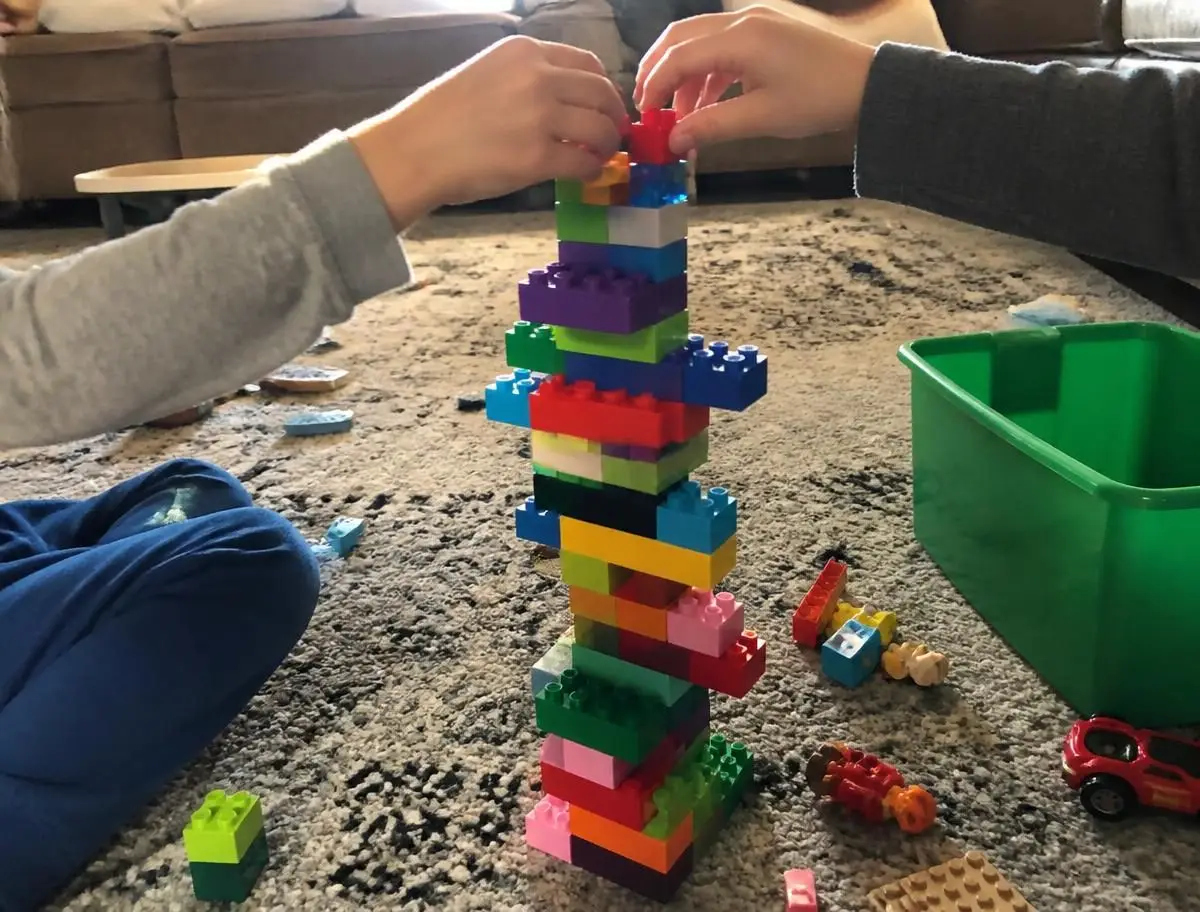
5. The tower competition

Everyone takes turns adding one brick of their choosing to a single shared tower. Wonky, wide, off-centre — anything is allowed.

Whoever knocks the tower down loses the round, so children learn very quickly to place bricks that make life hard for the next player.

It plays like Jenga in reverse and works with mixed ages, because a toddler can play the same rules as a seven-year-old.

One brick each, in turns — whoever topples it loses the round.

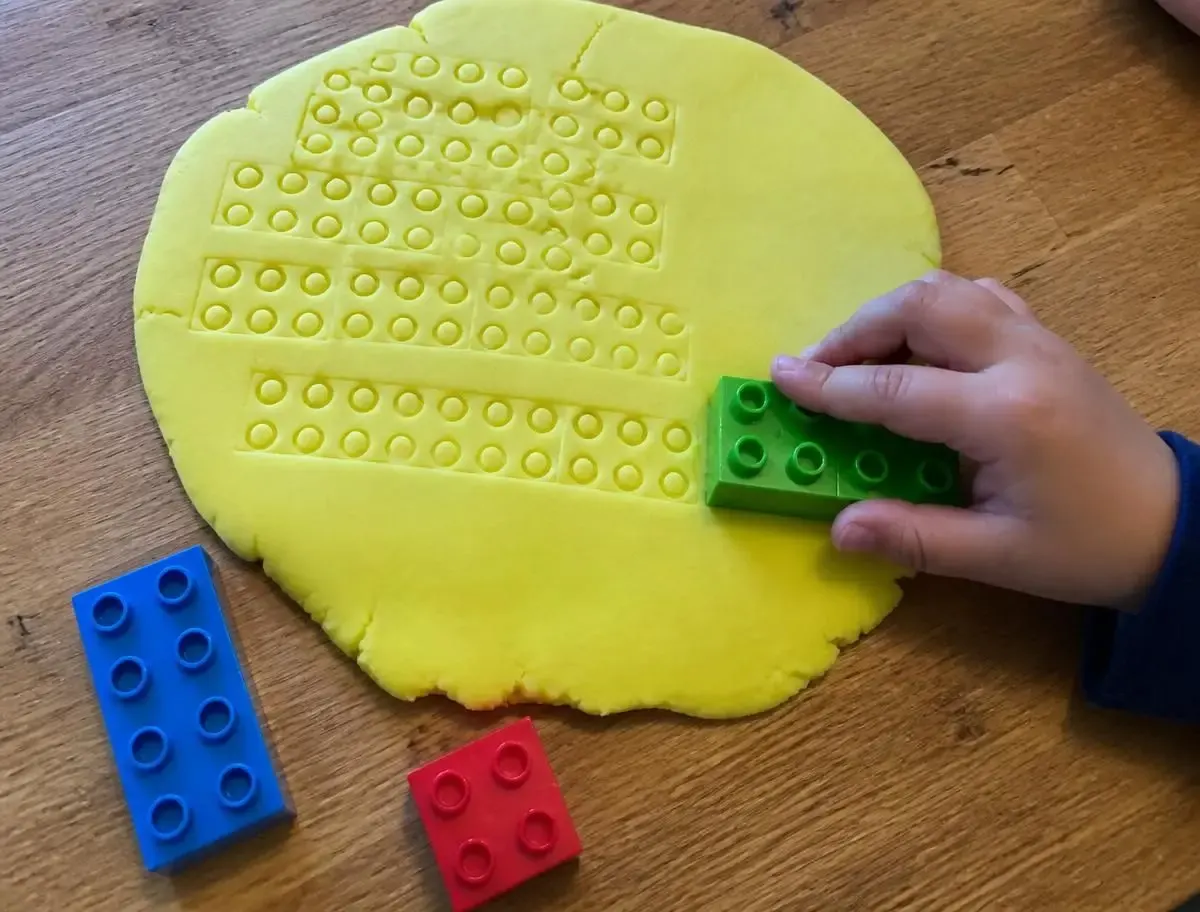
6. Bricks in playdough

Roll a slab of playdough flat and press bricks into it to leave rows of studs.

A 2x4 brick leaves eight dots — press it three times and you have counted three eights without anyone calling it maths.

Older children can build patterns, print repeating rows, or stamp the answer to a times table and check it by counting the dots.

Eight studs per press — multiplication you can count with a finger.

Tip

Six cards is plenty. More choices means less building. If your child finds copying frustrating, sit down and build your own version alongside theirs instead of correcting — they copy the modelling, not the instruction.
Shop the look

Everything on the table

This is an affiliate link. If you buy through it I earn a small commission, at no extra cost to you 🙏

Looking for everything we use?

Every product linked on this blog lives in one sorted place, with what it is, where we used it, and why I’d buy it again.

Browse Joy’s Recommendations →