Home/Nature Basket/Sundial and Shadow Tracking Basket
Sundial and Shadow Tracking Basket
Nature Basket

Sundial and Shadow Tracking Basket

A stick, a patch of sun and a piece of chalk. A whole day of coming back outside every hour to mark where the shadow moved - and a homemade clock that actually works.

This page may contain affiliate links. I earn a commission from qualifying purchases.
Ages 5-910 min prep

This started as a way to survive a long empty Sunday. We put a stick in a flowerpot of soil at nine in the morning and drew a chalk line where its shadow fell.

What I did not expect was the coming back. Every hour someone remembered on their own and ran out to draw the next line, and the whole day got quietly organised around it.

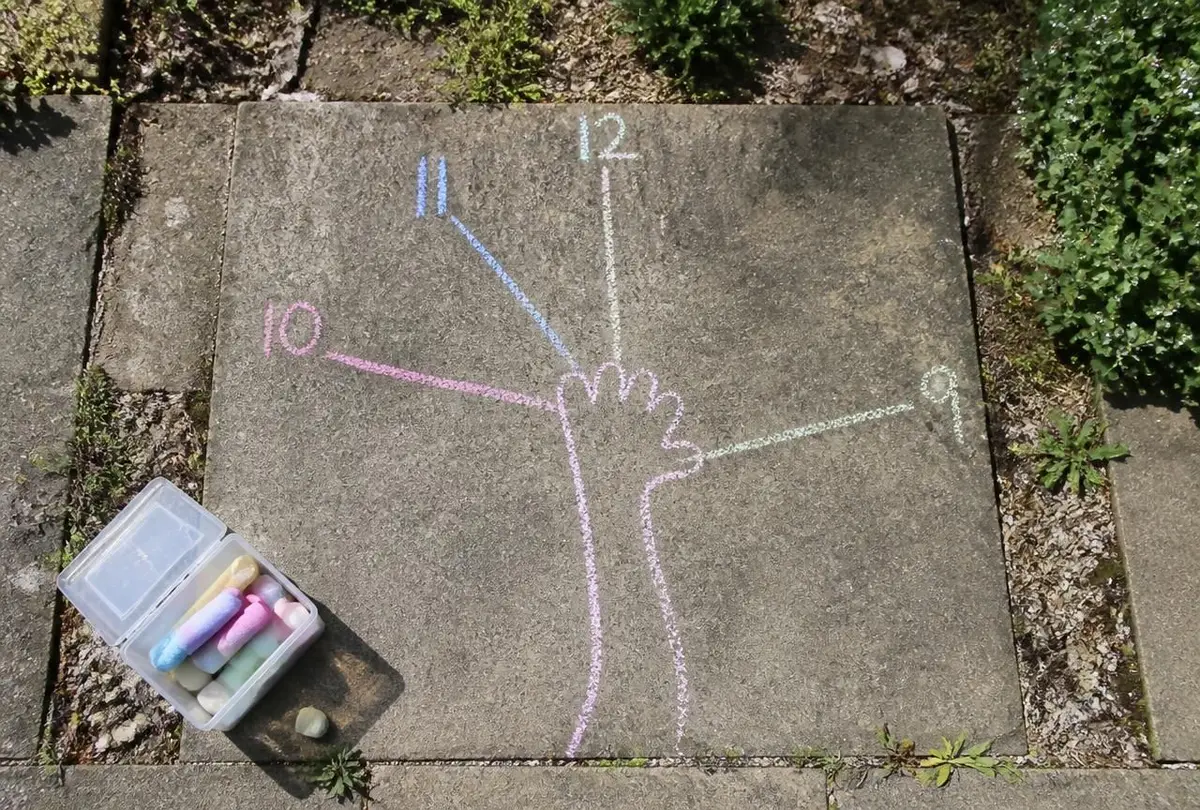
By four o clock we had a fan of chalk lines on the patio and a six-year-old explaining to his grandmother that the sun does not move, we do. That sentence was worth the entire day.

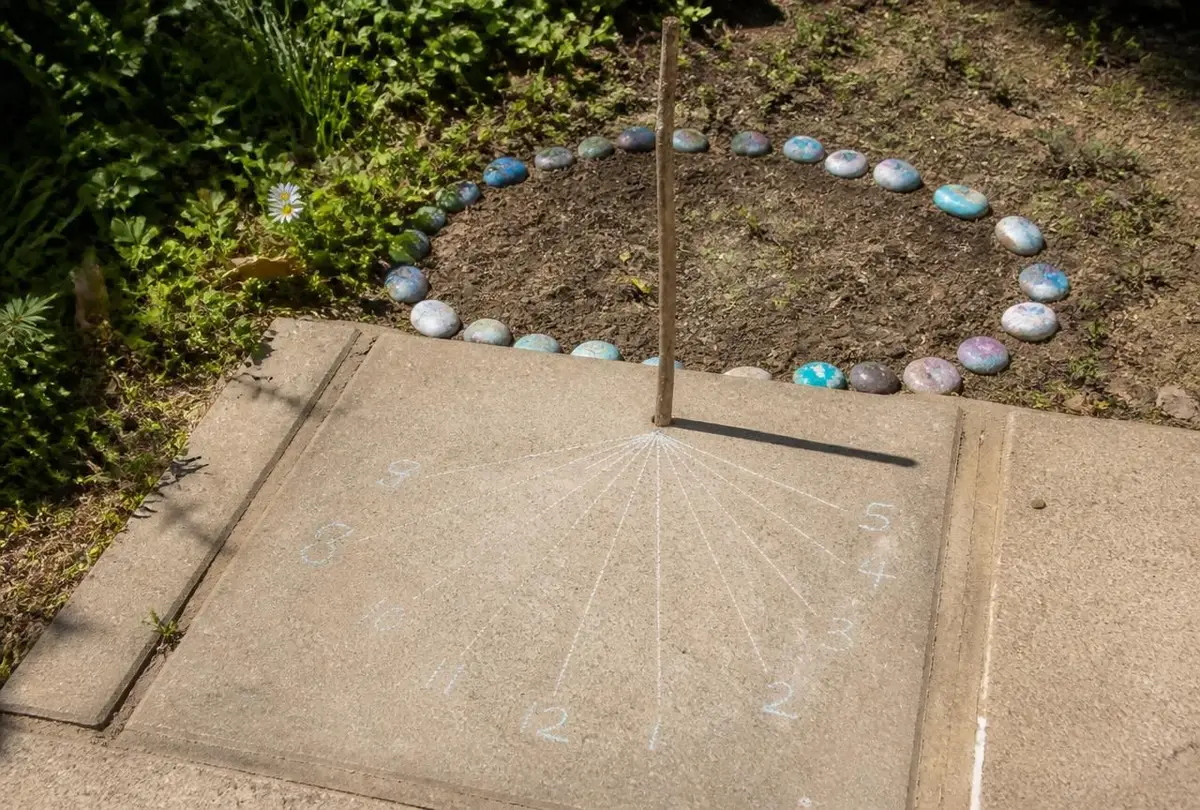
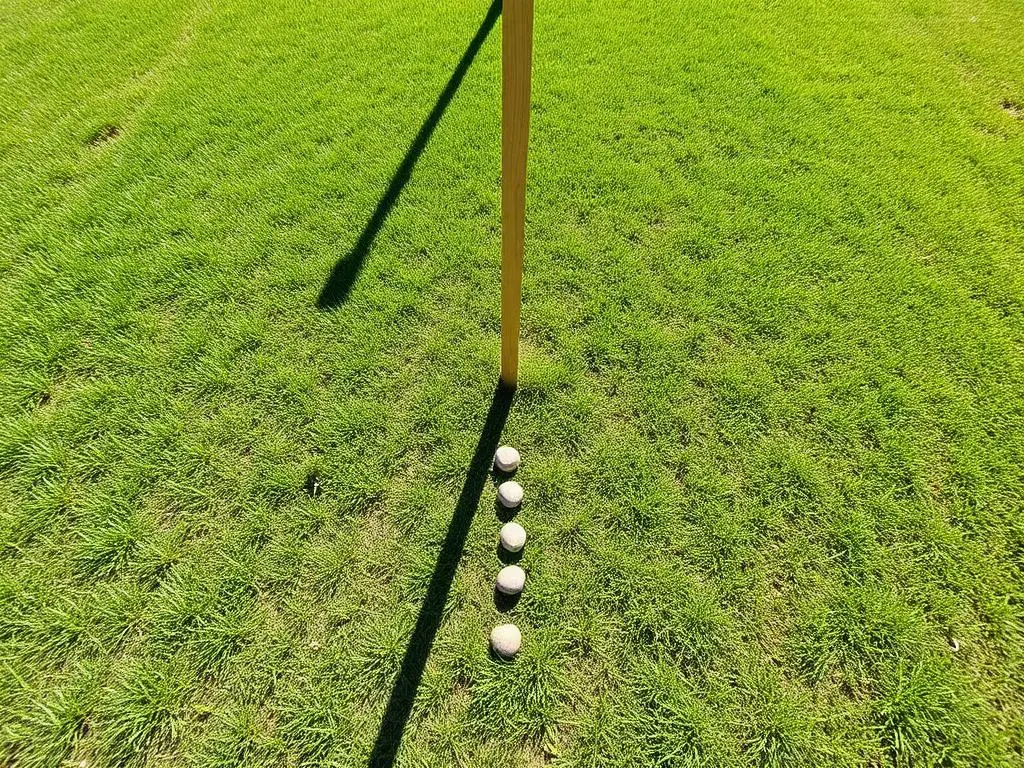
One stick in the ground and a line of pebbles — that's the whole sundial.
Chalk lines fanning out across the patio, one for every hour.
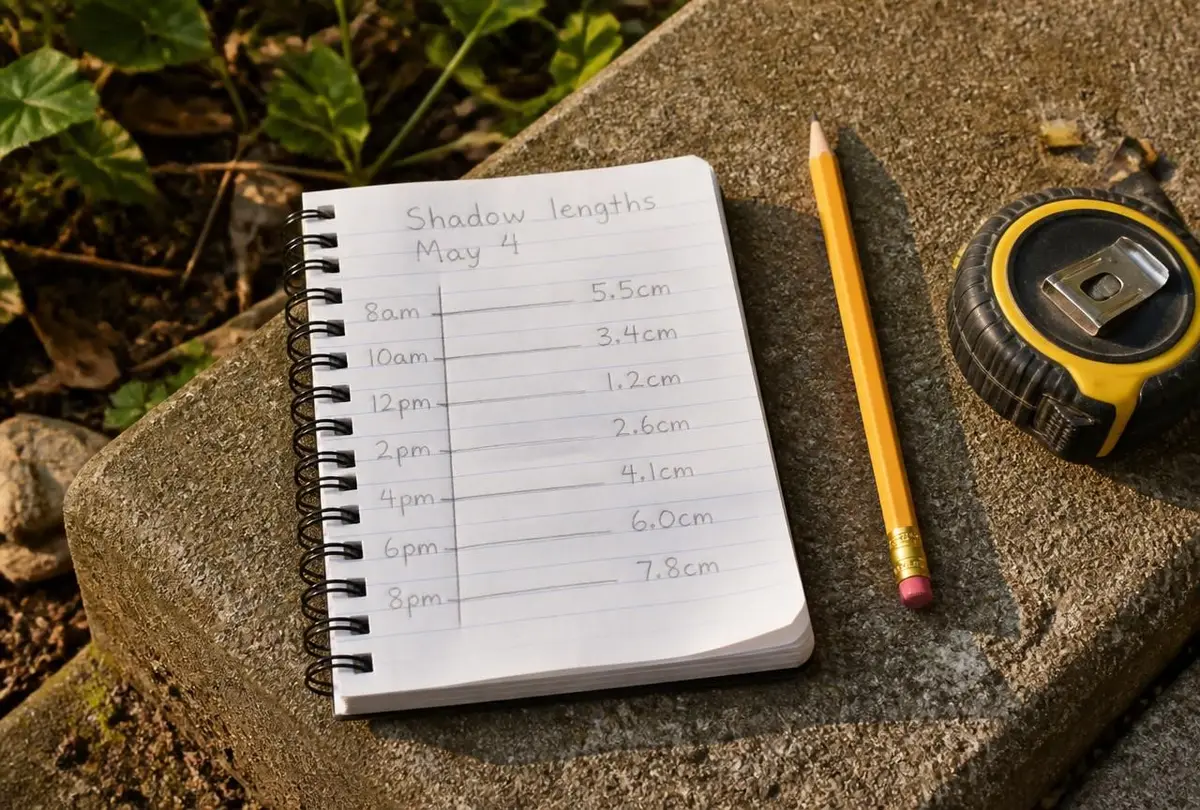
The shadow chart - hour, length, and a small drawing of the sky.

What you'll need

  • A straight stick about 30cm long, or a wooden spoon, or a pencil
  • A flowerpot filled with soil or sand to hold the stick upright, or a lump of playdough
  • Chalk for a patio, or a large sheet of paper and a stone to weight it down
  • A marker pen for writing the hour beside each line
  • A notebook and pencil for the shadow chart
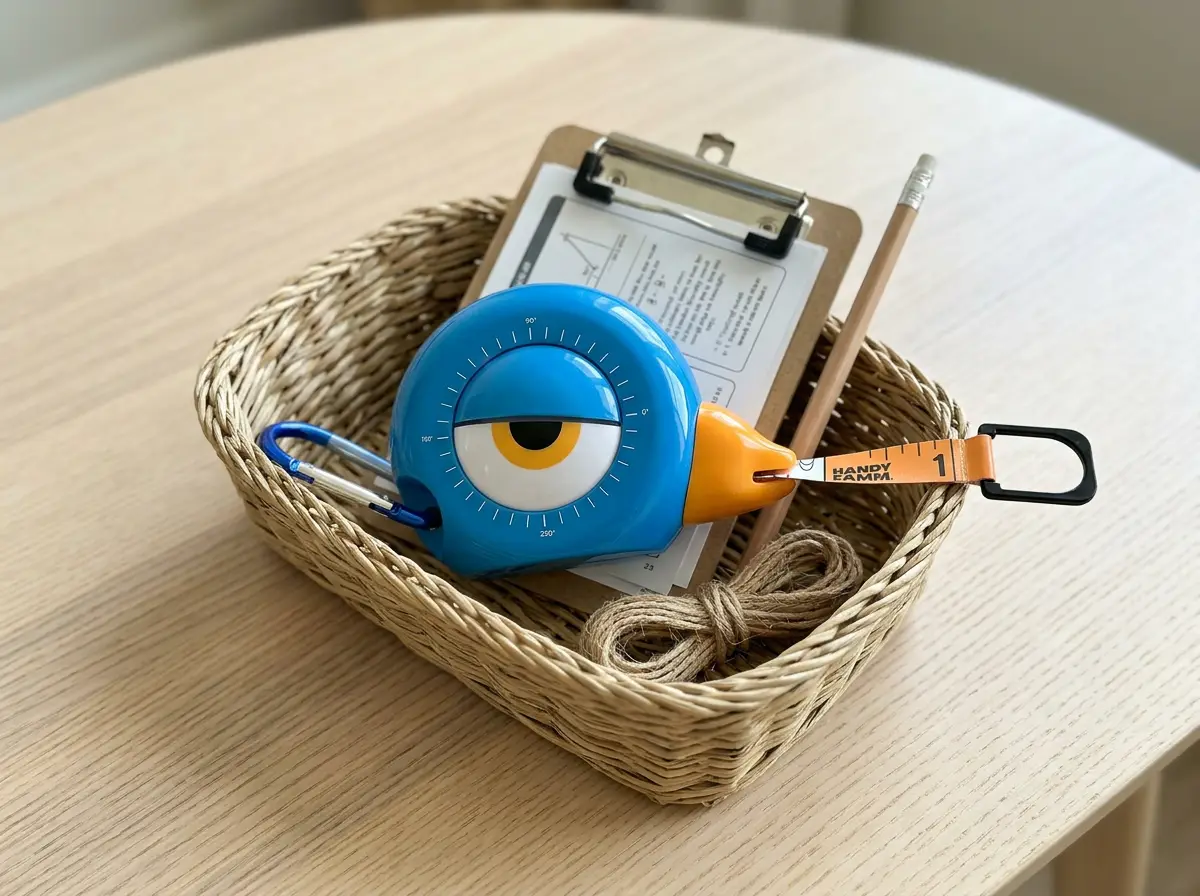
  • A tape measure or ruler, for measuring how long each shadow is
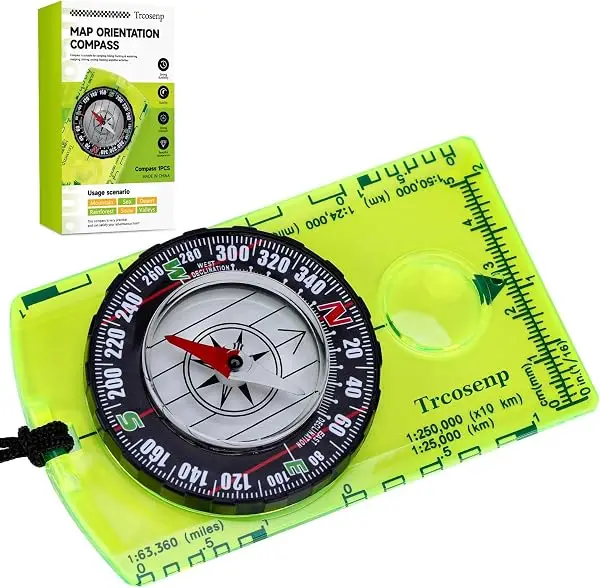
  • A kids outdoor compass, for finding north and marking it on the ground
  • A real clock or timer, so they know when the next hour is up

Underlined items are affiliate links — if you buy through them I earn a small commission, at no extra cost to you 🙏

How to make it

  1. 1

    Pick a spot that stays sunny all day - test it in the morning and again at lunch before committing.

  2. 2

    Push the stick upright into the pot of soil and stand it on the patio, or on a big sheet of paper.

  3. 3

    On the hour, draw a chalk line along the shadow and write the time at the end of the line.

  4. 4

    Measure the shadow with the tape measure and write the length in the notebook next to the hour.

  5. 5

    Come back every hour. Set a timer if they are the kind of child who needs one - most do not, after the third line.

  6. 6

    Around midday, notice together that the shadow is at its shortest. Ask why, and let them guess before telling.

  7. 7

    At the end of the day, look at the fan of lines. Ask which way the shadow moved and where the sun was for each one.

  8. 8

    The next sunny day, cover the clock and read the time from the chalk lines instead. This is the moment it lands.

Tip

Do this on a day you are home anyway, because the whole point is the returning. If you have no patio, tape a big sheet of paper to a tray and bring the whole thing inside overnight so nothing gets washed away.

Looking for everything we use?

Every product linked on this blog lives in one sorted place, with what it is, where we used it, and why I’d buy it again.

Browse Joy’s Recommendations →